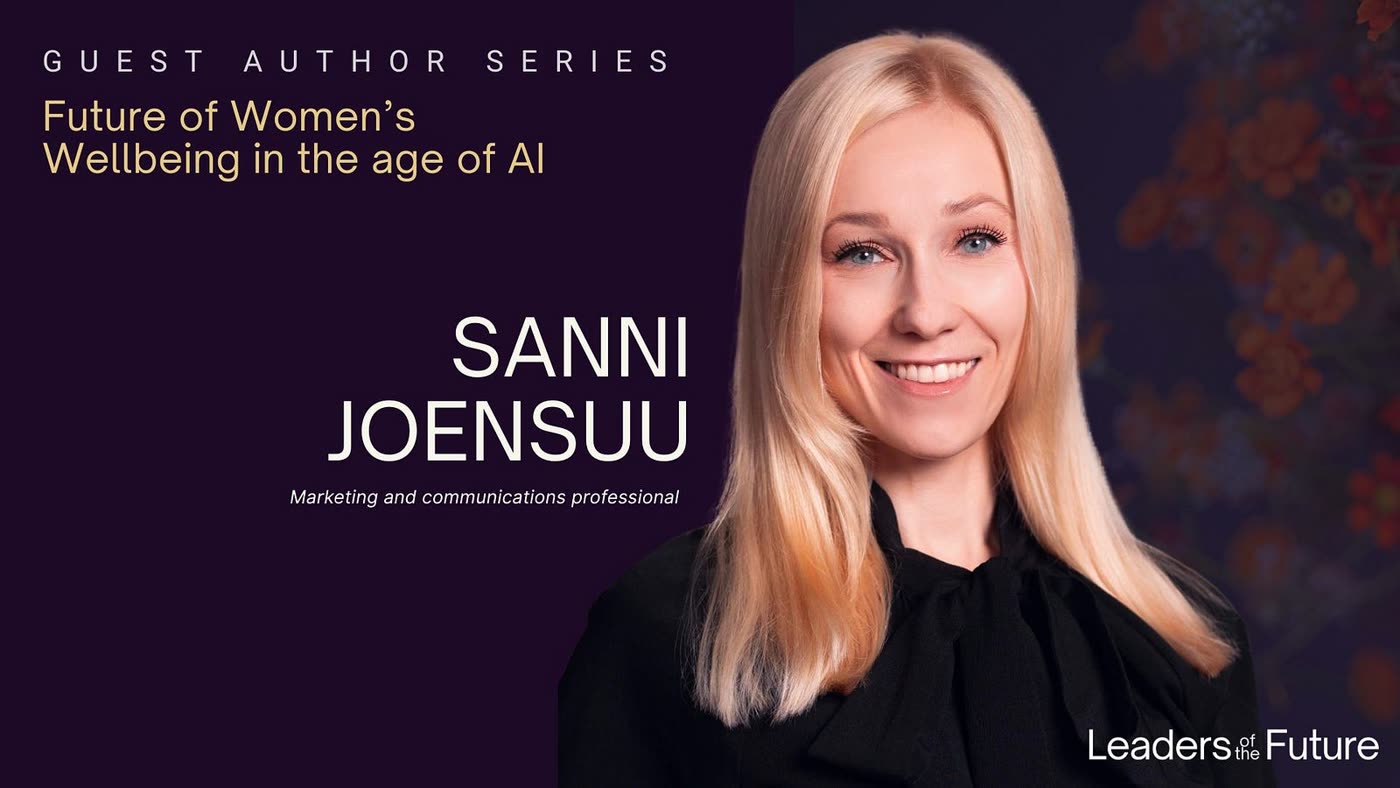
What if startups could close the decades-long gender gap in healthcare? How do we build cultures where wellbeing moves from an afterthought to a budget priority? Nine visionary leaders explored these questions at the second Leaders of the Future seminar on Future Women’s Wellbeing in the Age of AI. The seminar was hosted by Tarja Stephens (Leaders of the Future), Ana C. Rold(Diplomatic Courier & World in 2050), and Anne-Marie Enns (Pulledin Productions)
Whether you’re leading through change, building a startup, or rethinking what sustainable leadership looks like, these insights offer practical strategies from leaders who’ve navigated crisis and transformation.
Featured Speakers:
- Ana C. Rold , The Future at a Crossroads: Well-being as a Global Priority
- Dr. Bita Sarah Haynes , Thriving vs. Surviving: The Neuropsychology of Women’s Well- being and Longevity in a Modern World
- Dr. Lipi Roy , Protector or Villain: Can AI Be Used to Counter Medical Misinformation and Optimize Women’s Health?
- Mandeep Maini: Redesigning Healthcare: How AI and Founders Are Building the Future of Women’s Well-being
- Lisa Gable: Zig-Zagging Through Life and Leadership: Resilience in the Face of Chronic Illness
- Lindse Murphy: The Hidden Load: Why Working Women Can’t Afford to Ignore Mental Health
- Anne-Marie Enns: The Gift of Limits: Leading with Heart After a Transplant
- Barbora Pocuchova: Embody Your Highest Vision
- Tarja Stephens , Five Inner Powers From the Breast Cancer Journey: Shaping Leadership for Every Stage of Life
Here are the key takeaways from each speaker. You can also watch the whole seminar on YouTube or watch the ones you like; check the time stamp after each takeaway.
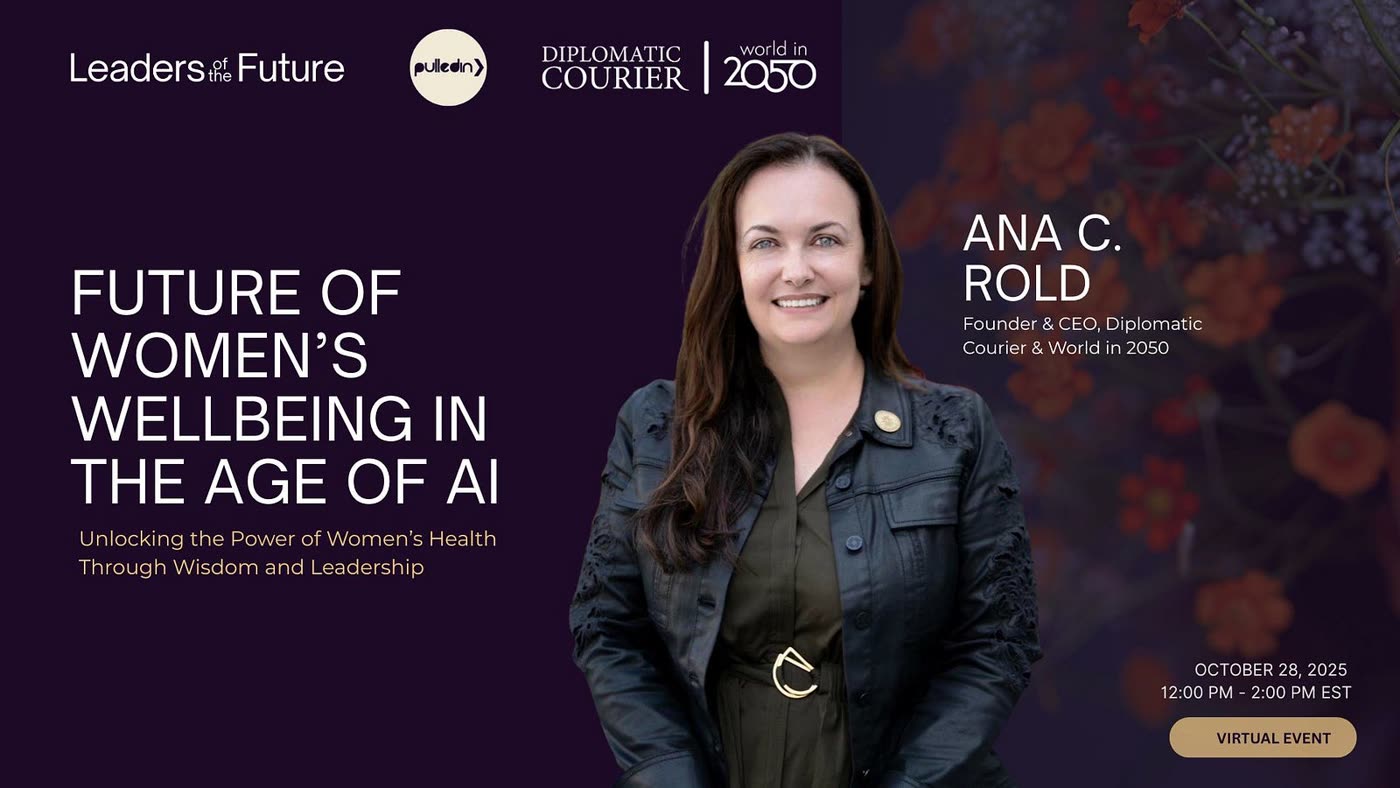
Ana C. Rold, The Future at a Crossroads: Well-Being as a Global Priority
Founder & CEO, Diplomatic Courier & World in 2050
Rold opened the seminar with alarming data: nearly 40% of people worldwide felt worried or stressed yesterday. She highlighted the loneliness epidemic (WHO) that diminishes our capacity to empathize and solve problems together. These are precisely the skills we need the most in the age of AI. Well-being has been treated as a personal pursuit, even though it is the hidden architecture that holds up our economies and societies.
Why should global leaders care? Emotions are early warning signs of societal fragility.
When emotional distress deepens, so does polarization, disengagement, and political
unrest.
”AI can process data, but it cannot feel meaning, cannot grieve, hope, or love. Those are the qualities that make societies resilient... When well-being is a global priority, peace and prosperity will follow.”
Watch Ana C. Rold’s talk from 00:06:00 onwards.
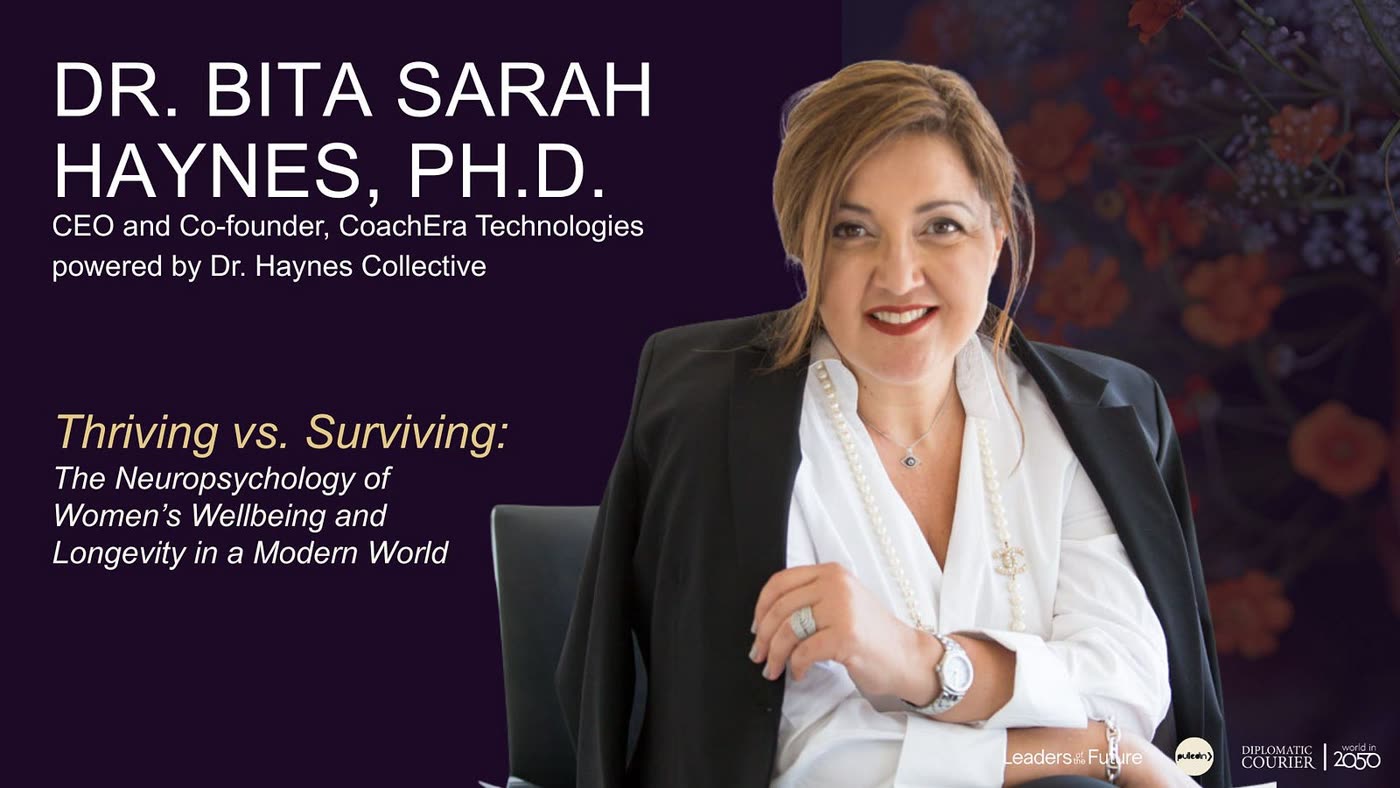
Dr. Bita Sarah Haynes, Thriving vs. Surviving: The Neuropsychology of Women’s Well-Being and Longevity in a Modern World
CEO & Co-Founder, CoachEra Technologies
Haynes packed 20 years of knowledge into 10 minutes. She addressed the burnout crisis: 60% of women leaders reported burnout post-2020 (McKinsey), and low employee engagement worldwide costs $8,8 trillion (Gallup). The problem? The superwoman trap and the thinking that “I’m the only person who can do this.”
Her solution: Ask for help and align with your core values. Most people can’t identify their five core values, but finding them is critical. Haynes used the butterfly metaphor to describe transformation:
”For it to be able to grow wings and to fly, it needs to have cocooning... Sit in the mess,
and as the metaphor, really kill the ego of the identity of being a person that can do
everything, and let go of that. Then it can grow wings and be able to fly.”
Watch Dr. Bita Sarah Haynes’ talk from 00:21:48 onwards.
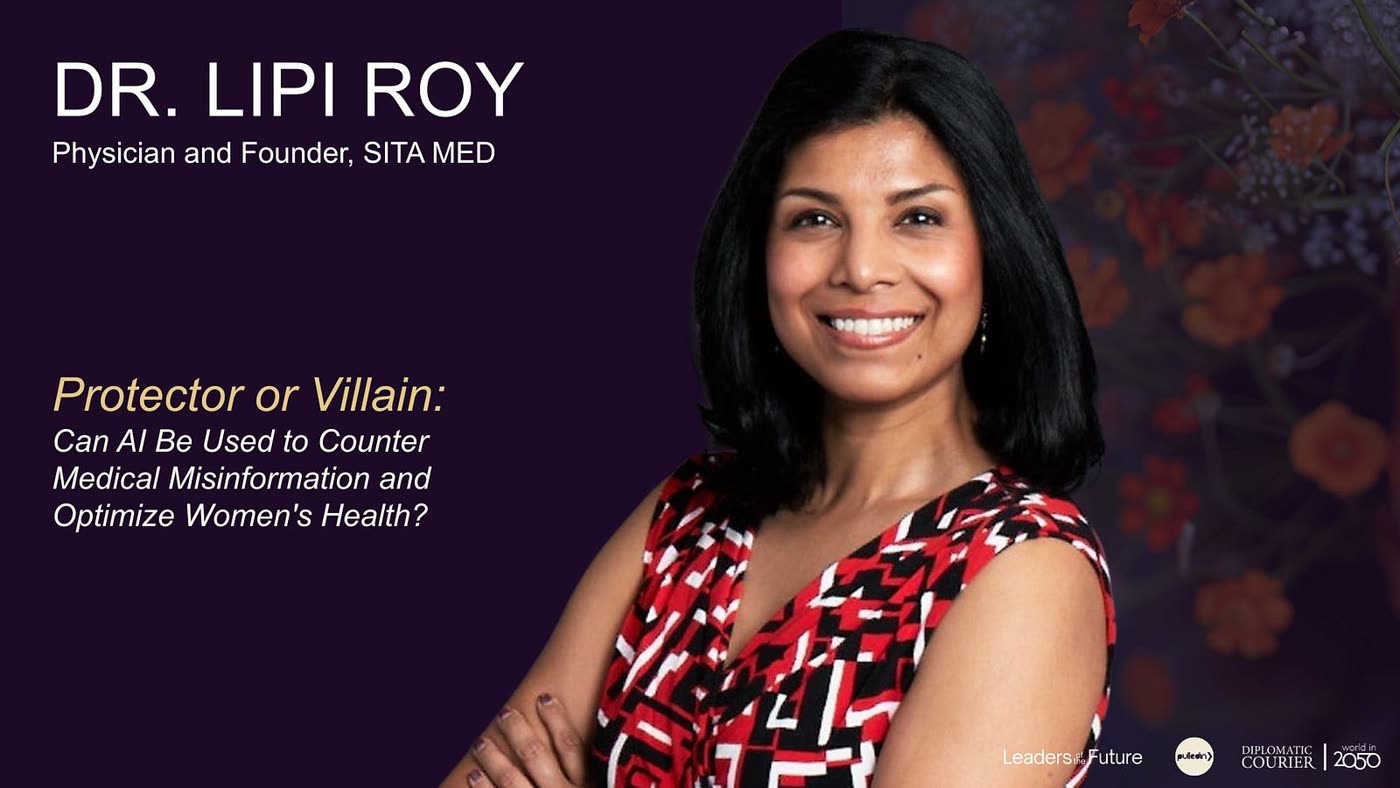
Dr. Lipi Roy, Protector or Villain: Can AI Be Used to Counter Medical Misinformation and Optimize Women’s Health?
Physician & Founder, SITA MED
Roy highlighted how traditional medical research, care delivery, and policy have historically marginalized women’s unique biological needs. For decades, clinical trials and treatment protocols were based on male anatomy, leading to heart disease being underdiagnosed in women, pain disorders misattributed as psychiatric illness, and reproductive health poorly understood.
AI-driven tools offer promise: in breast cancer screening, algorithms can identify subtle patterns missed by radiologists, improving early detection rates by 5-10%. But AI has limitations. Biased training data can perpetuate disparities, and sensitive health data requires strict privacy protections.
”Disrupting women’s health is critical because there are persistent gaps in access, equity, and quality of care that still remain unaddressed by traditional health care systems.”
Watch Dr. Lipi Roy’s talk from 00:37:26 onwards.
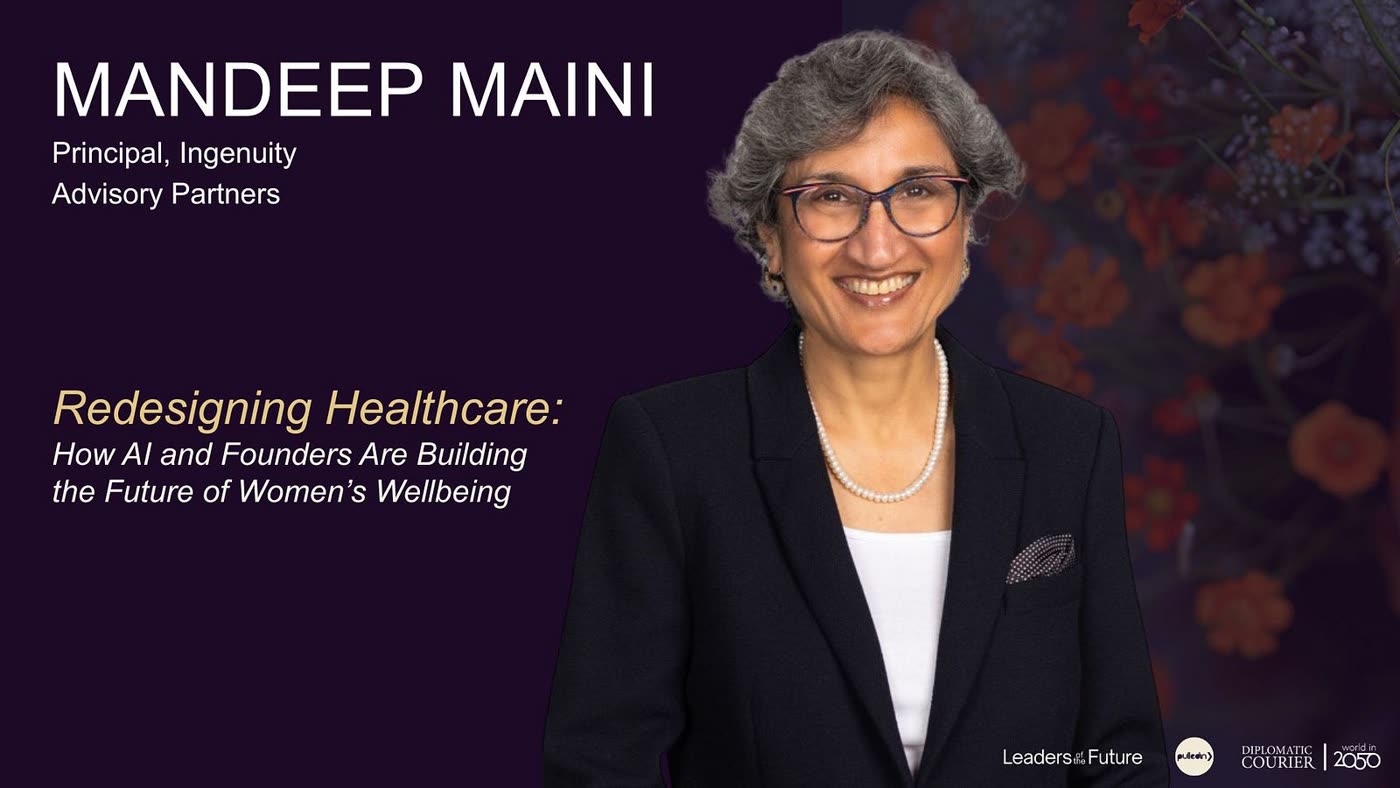
Mandeep Maini, Redesigning Healthcare: How AI and Founders Are Building the Future of Women’s Well-Being
Principal, Ingenuity Advisory Partners
Maini shared her thoughts about how AI is currently transforming healthcare and how
startups can accelerate that transformation. Currently, most startups are pursuing
efficiency by overlaying AI tools on healthcare workflows from the 50s to the 80s. But the real opportunity is transformation: throwing out old workflows entirely and democratizing access to care.
5 tips on how startups can differentiate themselves:
- Use compliance as a competitive edge.
- Get a seat at the table where regulation is being defined.
- Make verification a ritual.
- Integrate with current systems (for now)
- Include a path to change management & training.
”If we want to get to a piece of that trillion-dollar pie, we need to transform healthcare, and AI is very much capable of doing that. And startups that do that will be the ones who take that healthcare workflow from the 50s, 60s,70s, and 80s, and throw it away and reimagine a new healthcare delivery system starting from scratch.”
Watch Mandeep Maini’s talk from 00:51:26 onwards.
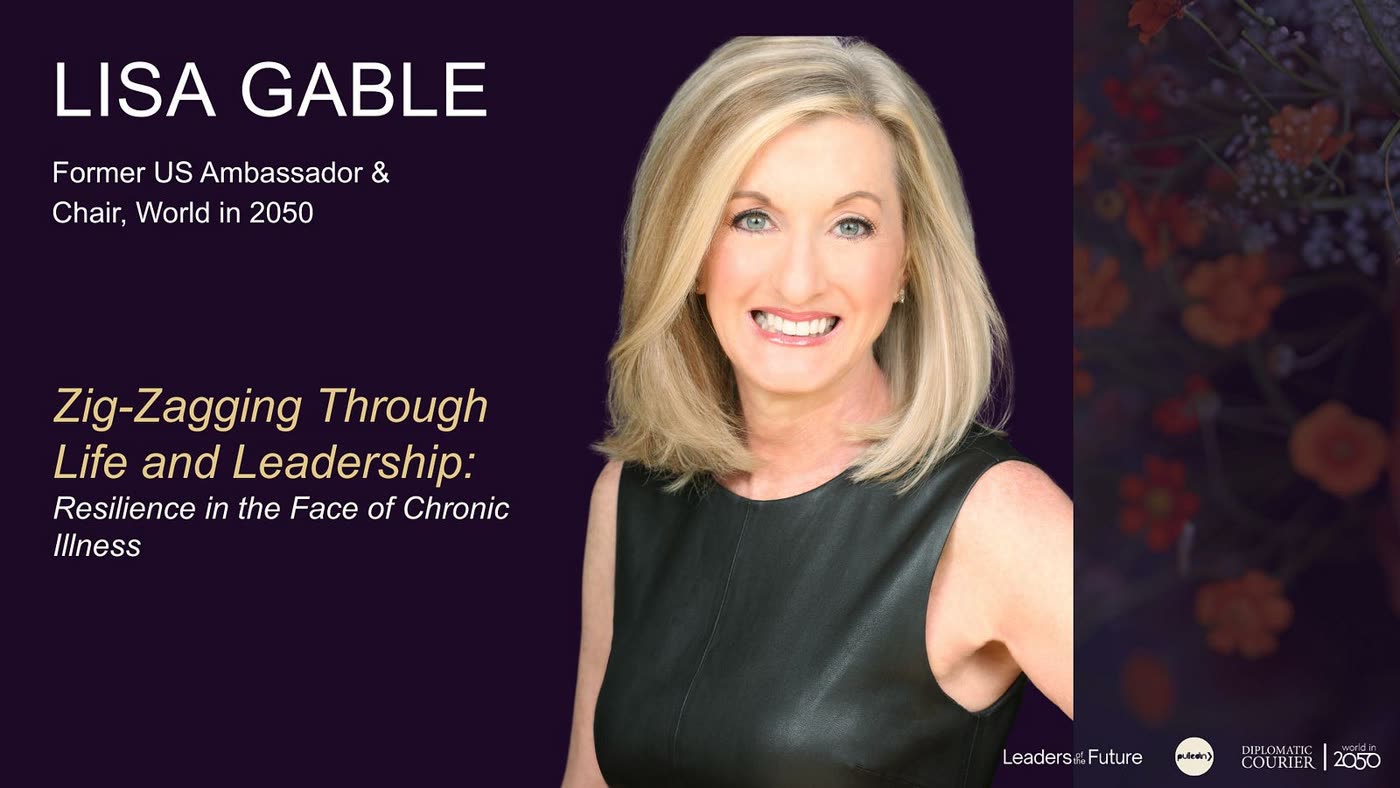
Lisa Gable, Fireside Chat, Zig-Zagging Through Life and Leadership: Resilience in the Face of Chronic Illness
Former U.S. Ambassador & Chair, World in 2050
Lisa Gable was racing up the Silicon Valley corporate ladder when her husband was
diagnosed with a rare cancer that would recur eight times. Suddenly, she had to redesign her entire life around chronic illness while maintaining her career.
Her solution: work in 3-year cycles inspired by US presidents. Start quickly, deliver results fast, and build systems that continue without you so you can step away when needed. Bringing things to a close became her theme song.
Gable’s strategy:
- Build a personal team: Success requires partnership.
- Rank everything: Constantly reassess whether obligations have become burdens.
- Take timeouts: Intense work requires recovery time.
Gable’s number one tip for leaders is honesty:
”People are scared to let people know what’s going on... But if you’re honest with them
and say, “I’m dealing with this issue. I need to be able to handle it in this way.” You would be surprised how accepting people are.”
Watch Lisa Gable’s talk from 01:04:45 onwards
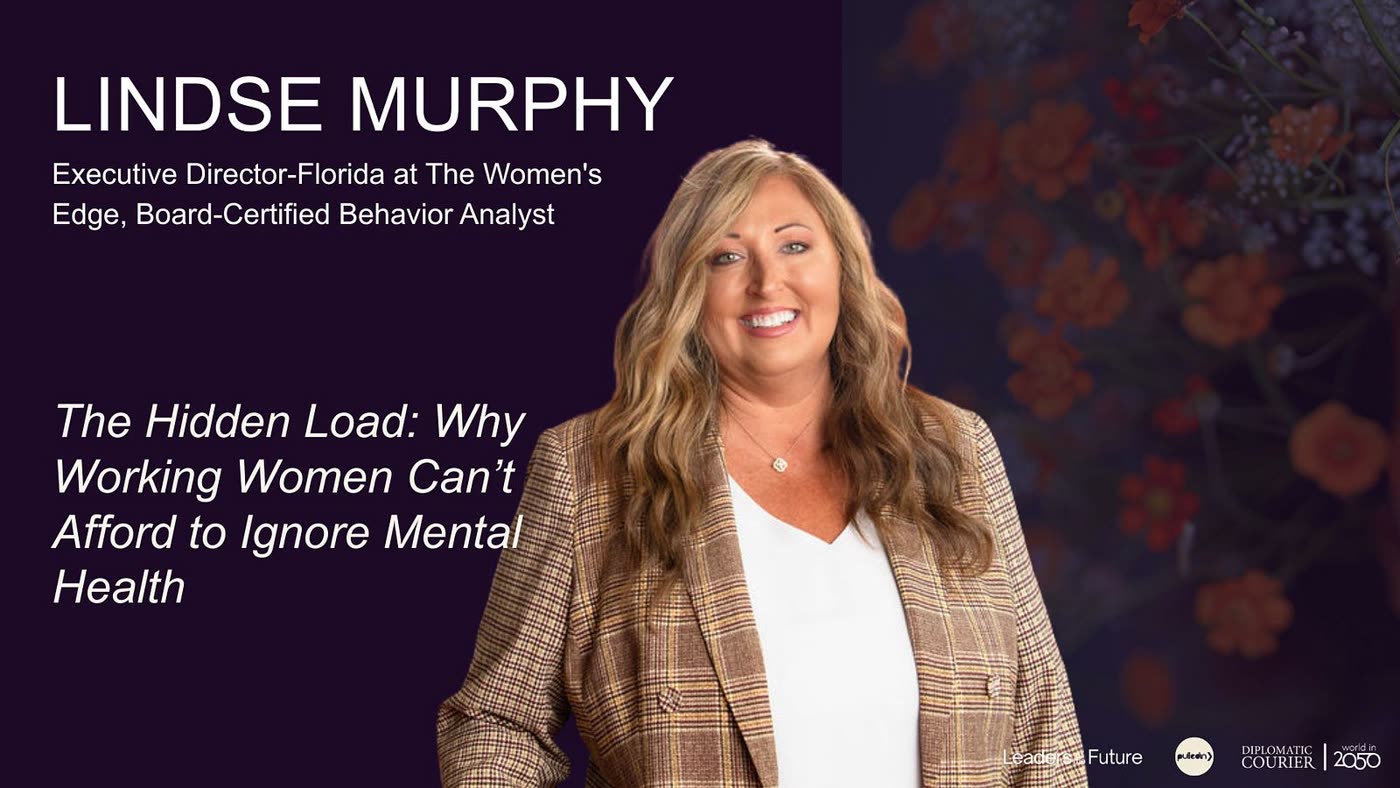
Lindse Murphy, The Hidden Load: Why Working Women Can’t Afford to Ignore
Mental Health Executive Director – Florida, The Women’s Edge
80% of women will put the well-being of others before their own, and mental health is
impacting one in five women today. Why do women carry this in silence? According to
Murphy, there are three reasons: Women carry mental health struggles silently due to
cultural conditioning, fear of workplace judgment (over 90% believe mentioning stress
would lead to negative treatment), and lack of safe systems.
Murphy defines well-being as the absence of suffering for individuals, processes, and
communities. How to become well:
- Start with the heart.
- Well-being belongs in the boardroom and the budget.
- Be guided by credentialed professionals.
- Use evidence-based approaches
“We cannot separate a woman’s wellness from the culture she works in. The culture that we work in is critical for everyone’s success that reaches far beyond our four walls.”
Watch Lindse Murphy’s talk from 01:20:26 onwards.
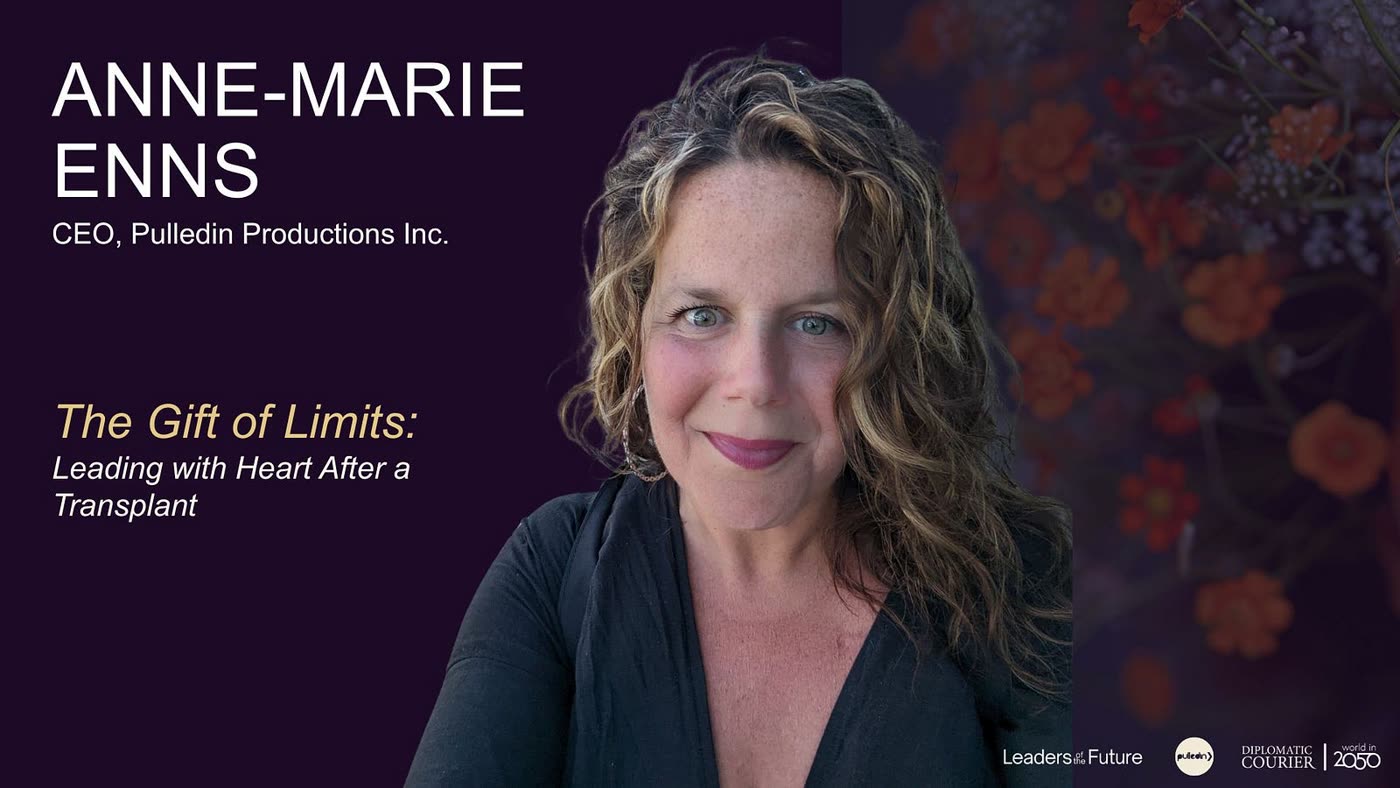
Anne-Marie Enns, The Gift of Limits: Leading with Heart After a Transplant
CEO, Pulledin Productions
Three years ago, while on a beach in Spain, Anne-Marie Enns experienced a life-threatening cardiac event. She was revived twice, and doctors later discovered she had 90% scar tissue on her heart and, without a transplant, she wouldn’t survive. She’d been misdiagnosed for years. The transplant approval process was extremely hard, but in the end, on Christmas 2023, Enns got her new heart.
Her transformation revealed what truly matters in leadership:
- Only choose projects and people that bring joy and purpose.
- Protect your time for what matters.
- Value rest as much as results
- When facing a real crisis, small problems lose their weight.
- Advocate for yourself and speak up when something isn’t right.
- Know your worth
”I did not have this transplant to work all the time, and that’s what matters. I value rest as much as results. I lead with patience and gratitude now.”
Watch Anne-Marie Enns’ talk from 01:34:56 onwards.
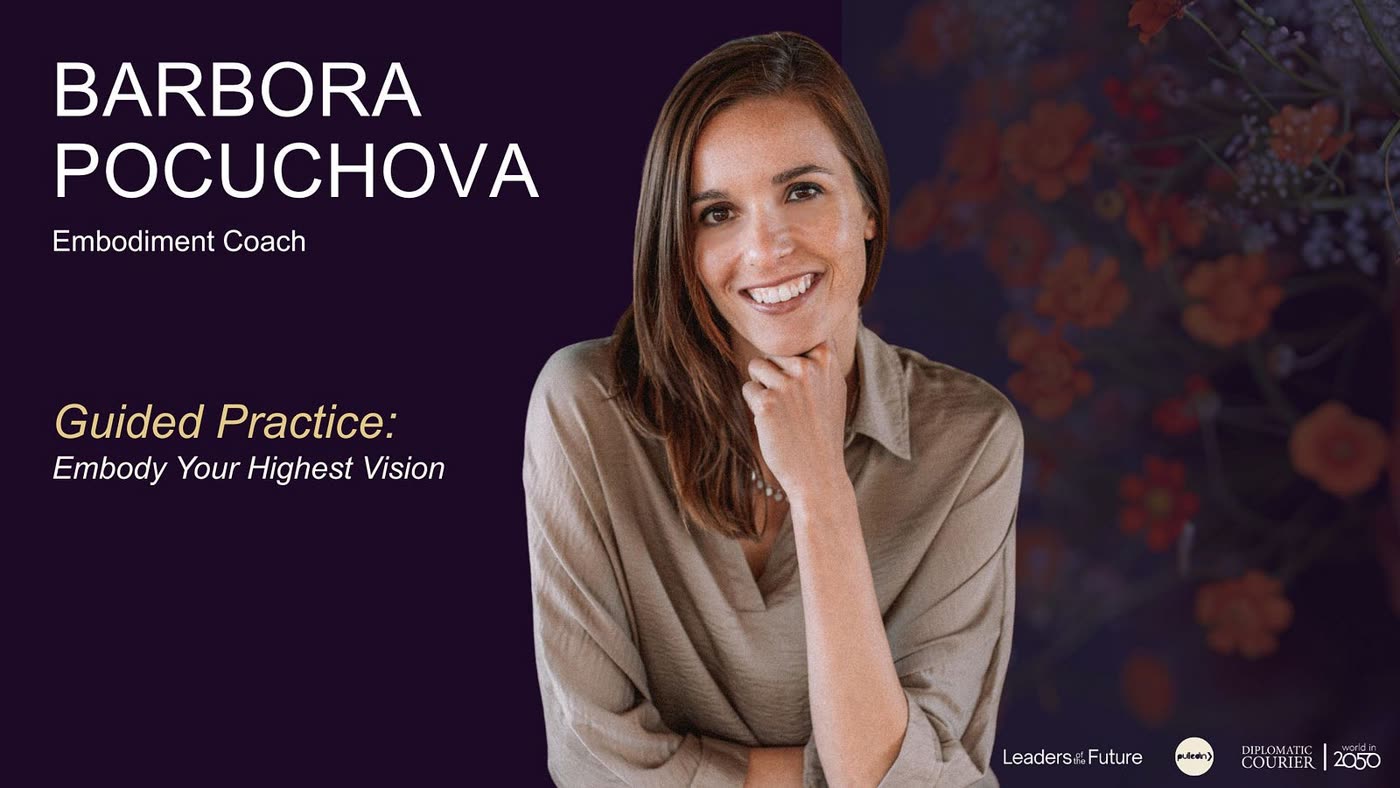
Barbora Pocuchova, Guided Practice: Embody Your Highest Vision
Embodiment Coach & Writer
Pocuchova held a guided embodiment session to help participants integrate the insights from the day. Through breathwork and visualization, she guided participants to release what no longer serves them and connect with their higher self.
”What are you tired of carrying? What no longer belongs in your system?”
Watch Barbora Pocuchova’s talk from 01:49:51 onwards.
Tarja Stephens, Five Inner Powers From the Breast Cancer Journey: Shaping Leadership for Every Stage of Life
Founder, Leaders of the Future
Tarja Stephens shared a personal reflection on her breast cancer journey, using it to remind us how quickly life can change. Stephens is now cancer-free, and she highlighted how essential it is to listen to our bodies, support one another, and lead with humanity.
She closed the seminar with five inner powers that guided her through the past year:
- Change
- Resilience
- Intuition
- Voice
- Love
“Sharing your story matters. You matter, and your voice has the power to create that change. So use it. Use it every single day.”
Collective Message
This seminar revealed uncomfortable truths: decades of medical research based on male anatomy, 90% of women fearing judgment for admitting workplace stress, and 80% of women putting everyone else first. But it also offered practical strategies from leaders who’ve lived through crisis: Lisa Gable’s 3-year cycles and support teams, Anne-Marie’s clarity that life is too short to waste on draining work, and Lindse Murphy’s call to put well- being in budgets rather than treating it as an afterthought.
AI can be used to optimize healthcare and analyze patterns, but it can’t heal loneliness,
build trust, or create the cultures where women feel safe speaking up. That work is ours, but this seminar was proof that we’re already moving in that direction.
About the Author
Sanni Joensuu
Sanni is a marketing and communications professional with an MBA, working in the startup world. She writes on LinkedIn and Substack, including a series of interviews with six successful business leaders. She is particularly interested in artificial intelligence.
Connect with Sanni LinkedIn
This piece is part of the Leaders of the Future Guest Author Series, bringing together visionary leaders whose insight and wisdom are shaping the next era of leadership in the Intelligent Age. Explore additional pieces from the Leaders of the Future Guest Author Series here.