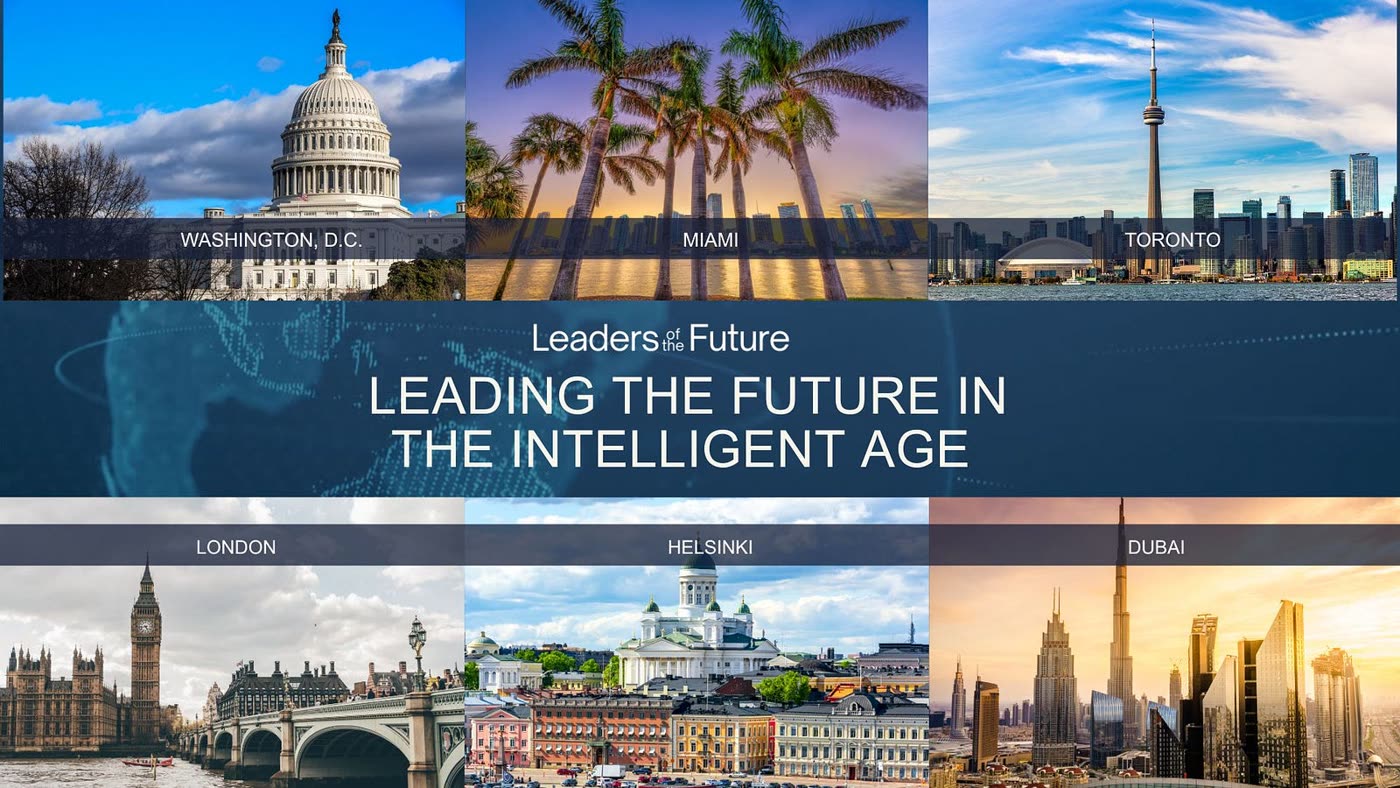
How do you lead when truth becomes malleable? When AI knows only what we’ve taught it? When five generations, plus AI as the sixth, are working together? Eight visionary leaders tackled these questions and more at the first Leaders of the Future Global Launch Seminar: Leading the Future in the Intelligent Age. These talks are concrete and highlight the actions leaders can take today to shape the future, and how you can play a role in what comes next.
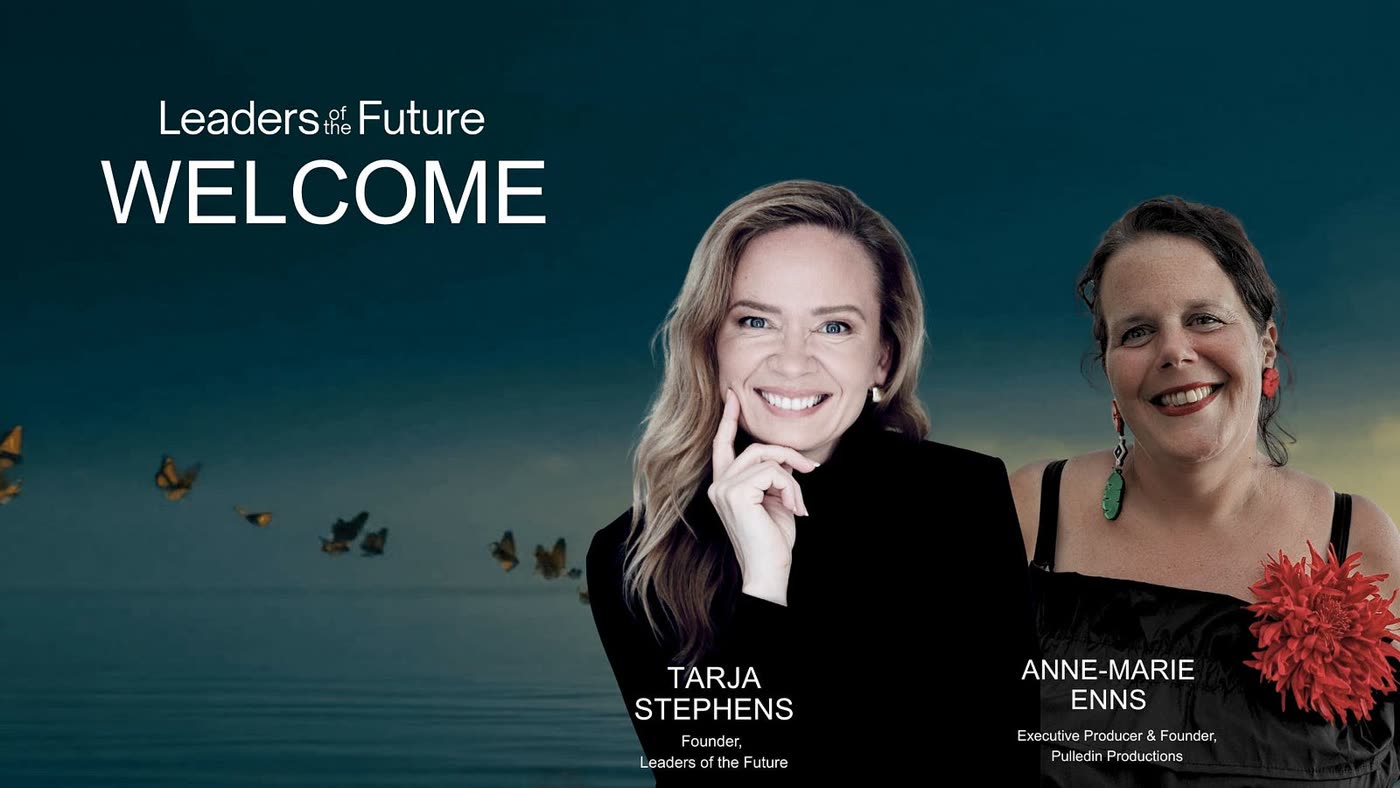
The seminar was hosted by Tarja Stephens, Founder of Leaders of the Future, and Anne-Marie Enns, Founder of Pulledin. This global seminar features:
- Ana C. Rold: Helping the Future Arrive Well for All
- Rob Petrosino: Digital Deception: How AI is Rewriting Reality
- Kira Sjoberg: The Human Layer: Designing AI that Works for Us
- Tangy Frederick: Could Quantum Physics and Neuroscience Transform Technology and Human Potential?
- Ville Ojanen: Human Skills: The Key to Unlocking AI’s Potential
- Patrice Gordon: Reverse Mentoring in the Age of AI: Reclaiming Intergenerational Power
- Anna Kuusela: Moving from Force to Flow: Finding Your Best Leadership Rhythm
- Nicole Vasquez: The Future of Networking: How AI Will Change the Way We Build Professional Relationships
Here are the key takeaways from each speaker. You can also watch the whole seminar on YouTube or watch the ones you like; check the time stamp after each takeaway: [Access the YouTube Recording](https:// www.youtube.com/watch?v=ePraQ48hocc)
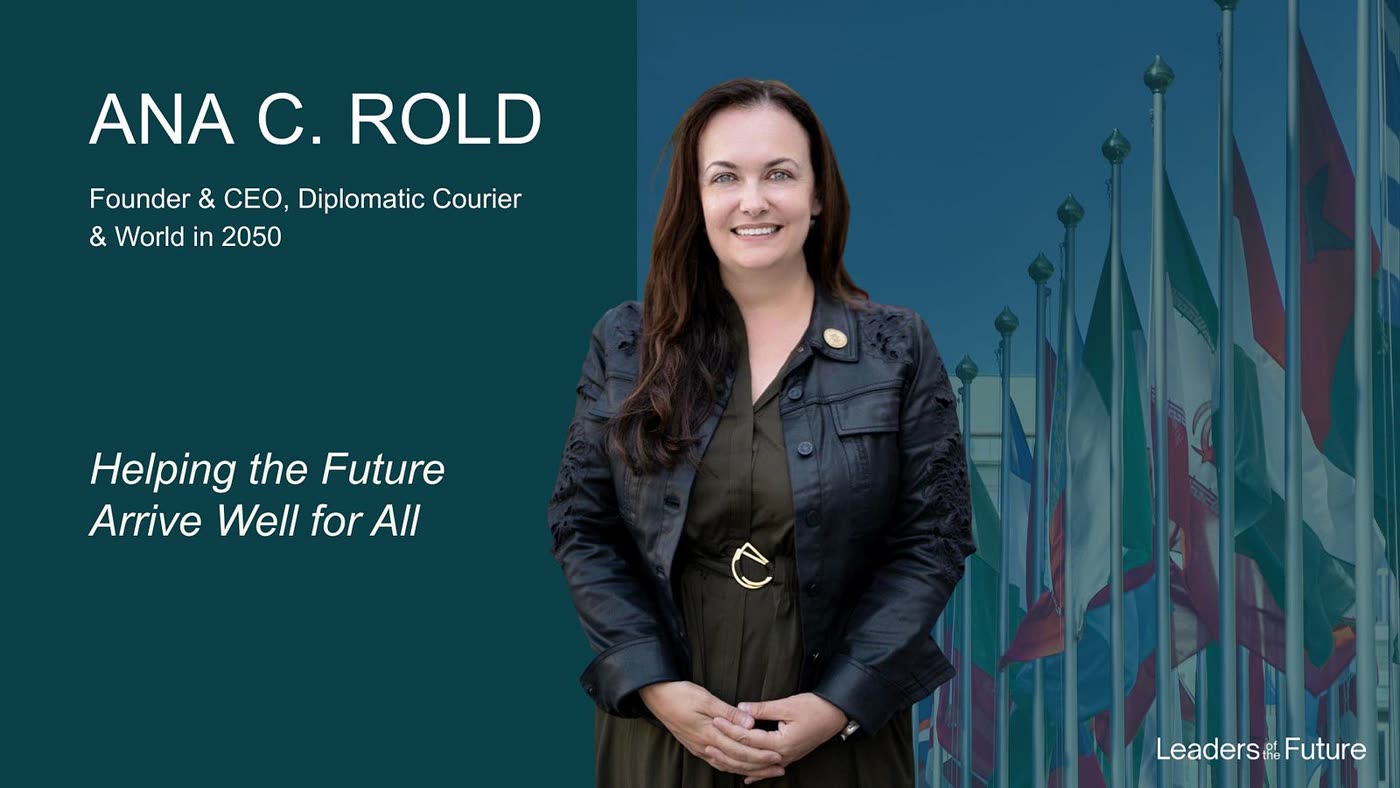
Ana C. Rold: Helping the Future Arrive Well for All
Founder & CEO, Diplomatic Courier & World in 2050
Rold opens the seminar by presenting five mega trends shaping the next decades:
- Exponential technologies: exponential opportunity vs. exponential risk.
- Disruption from climate change and energy transition is surging: from scarcity to regeneration.
- Transformation in education and work: how do we design progress, so that no one is left behind?
- Individual and societal well-being at an inflection point: how life expectancy rises, but health gap widens.
- Societal and governance institutions under pressure: can we regulate at the same speed we innovate?
She emphasizes that mega trends are not predictions, but directional signals that require preparation now. The core question is: will the future be Mad Max or Star Trek? According to Rold, the future does not just happen; the future is something that we co-create today.
A DIY futurist practice for strategic forecasting:
- Scan trends, and don’t ignore signals.
- Collaborate with people outside your bubble.
- Build resilience into every decision.
”If I had a time machine, I would be laser-focused on what’s happening today, because every single little motion we make today has a huge cascading effect in how to help the future arrive well.” - Ana C. Rold
Watch Rold’s speech from 9:24.
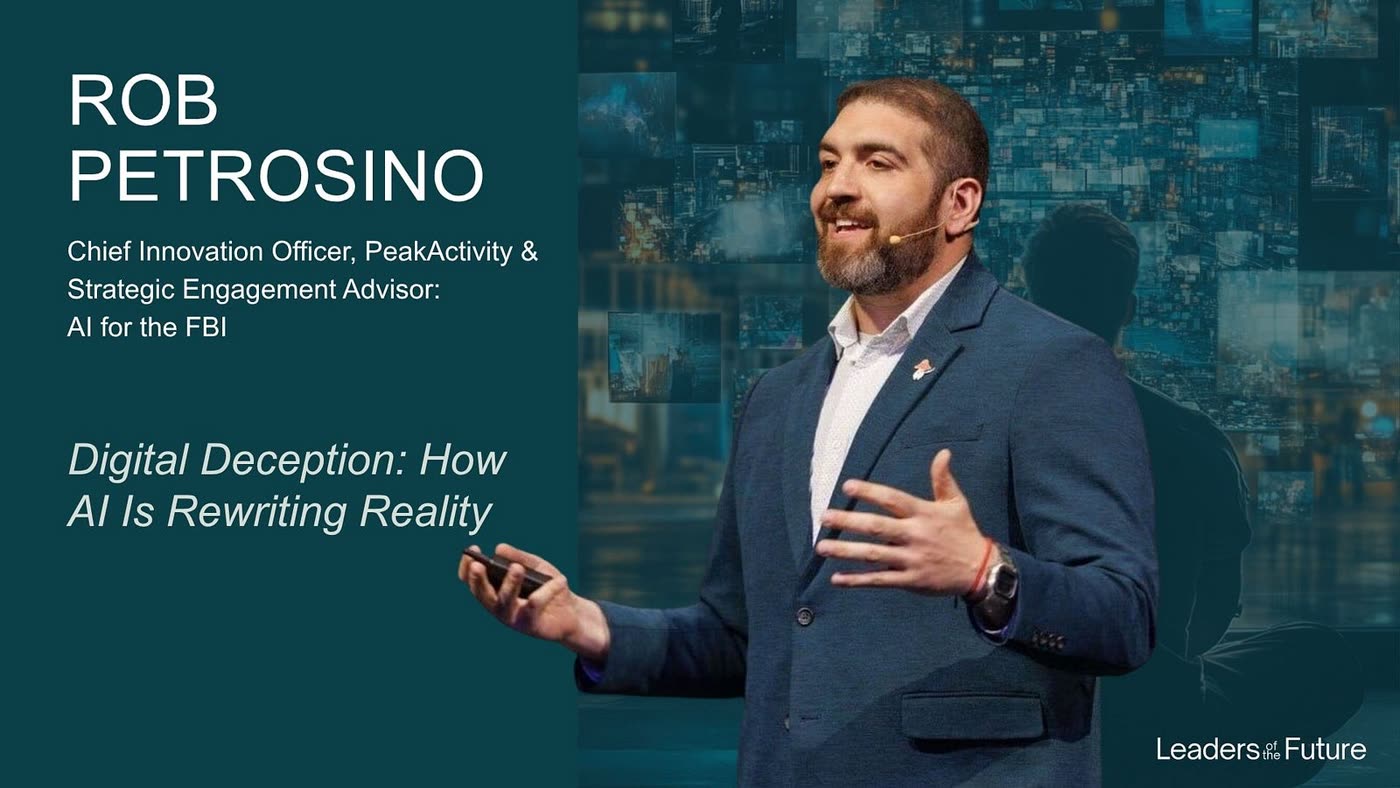
Rob Petrosino: Digital Deception: How AI Is Rewriting Reality
Chief Innovation Officer, PeakActivity, Strategic Engagement Advisor: AI for the FBI
Petrosino covers in his speech the evolution of deepfakes and synthetic media, from early GANs (generative adversarial networks) to today’s photorealistic models. Petrosino explains how AI-generated content is eroding the foundations of trust and truth that societies have relied on for centuries. Nowadays, photos, videos, and even live appearances can no longer be taken at face value.
The question is, what can be done if trust does not equal truth anymore? According to Petrosino, the answer is to adapt. It is essential to establish protocols for content verification and train company teams to question authenticity. The ability to be a critical thinker is now a core leadership competency.
”No absolute. Everything is malleable related to truth in the world of technology. There is no perfect solution, and adaptation is constant.” - Rob Petrosino
Watch Petrosino’s talk from 29:00 onwards.
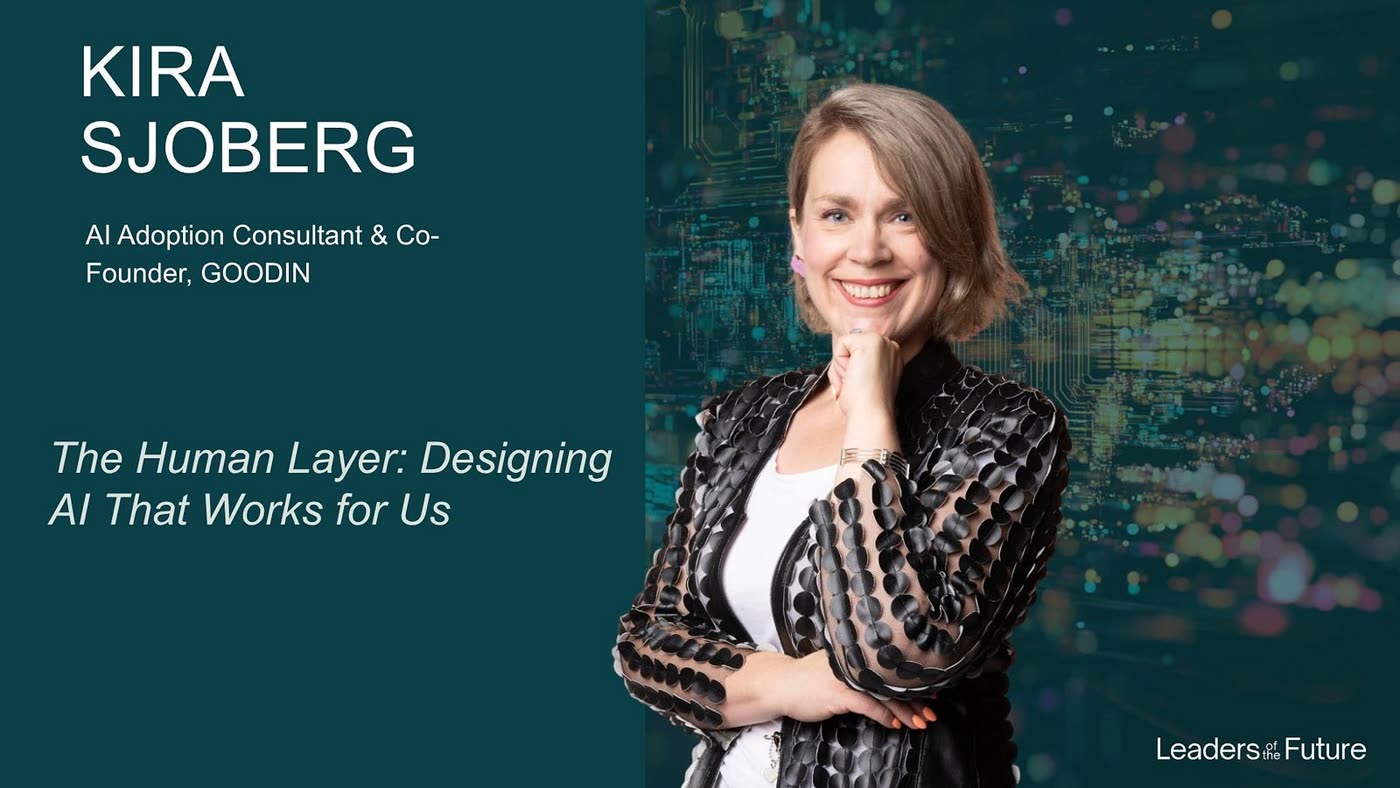
Kira Sjoberg: The Human Layer: Designing AI That Works for Us
AI Adoption Consultant & Co-Founder, GOODIN
Sjoberg challenges in her presentation a fundamental assumption: AI doesn’t know everything on the internet, it only knows what humans have taught it and how we’ve taught it. She identifies three critical filters that shape AI systems, and which are essential to AI literacy:
- Missing data: for example, history vs. Herstory
- Oral knowledge has not been digitized.
- Shifting meanings - words lose and gain nuance
According to Sjoberg, the biggest risk is “organizational blindness”, when AI makes decisions and leaders don’t even know how to intervene when something goes wrong. She recommends that before approving any AI tool, leaders should gather diverse teams and ask: “What do you think this AI actually knows?” The gaps revealed are where leadership is needed most.
”AI will undeniably shape the future. The question is, will it be guided by a thoughtful human layer or distorted by incomplete data? Without active involvement, the distortions could be enormous.” - Kira Sjoberg
Watch Sjoberg’s talk from 40:07 onwards.
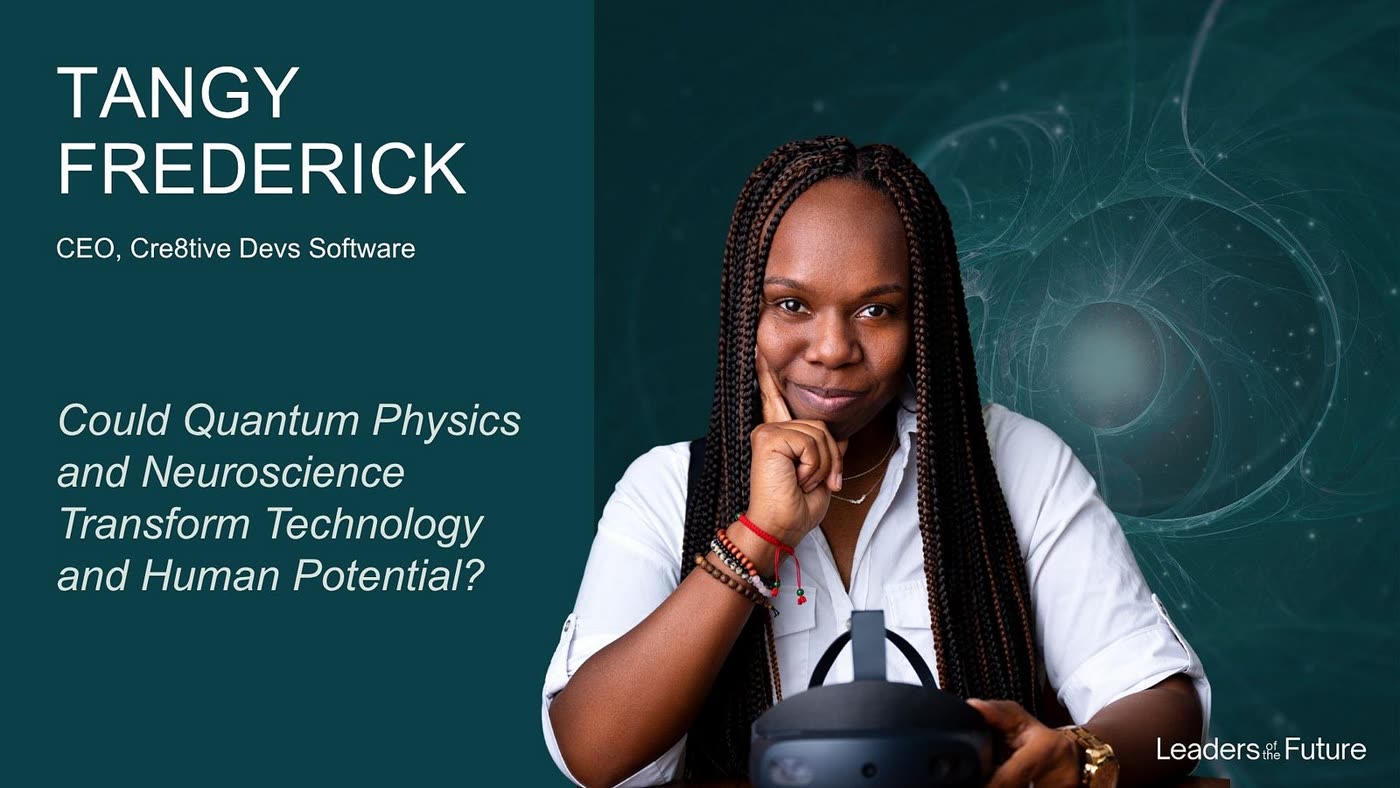
Tangy Frederick: Could Quantum Physics and Neuroscience Transform Technology and Human Potential?
CEO, Cre8tive Devs Software
Frederick explored the intersection of quantum physics, neuroscience, and human potential. She shared why humans still have an advantage over AI. Human brains are neuroplastic: the brains have a lifelong ability to rewire itself and form new neural connections based on learning and experience. Quantum computing and the human brain have similarities, and one of them is the ability to process vast amounts of information in parallel.
Frederick’s company Cre8tive Devs Software, developed extended reality (XR) technology that measures brainwaves to help people visualize better lives for themselves or break patterns. The goal is to show that individuals have the capability within to improve their lives, to understand neuroplasticity, and to grow in ways AI cannot replicate.
”Our human potential is something that we should really be aware of. We have the capability to learn more about what is happening in technology because, as human beings, we’re creating this technology. We’re not here to have technology create us.” - Tangy Frederick
Watch Frederick’s talk from 53:51 onwards.
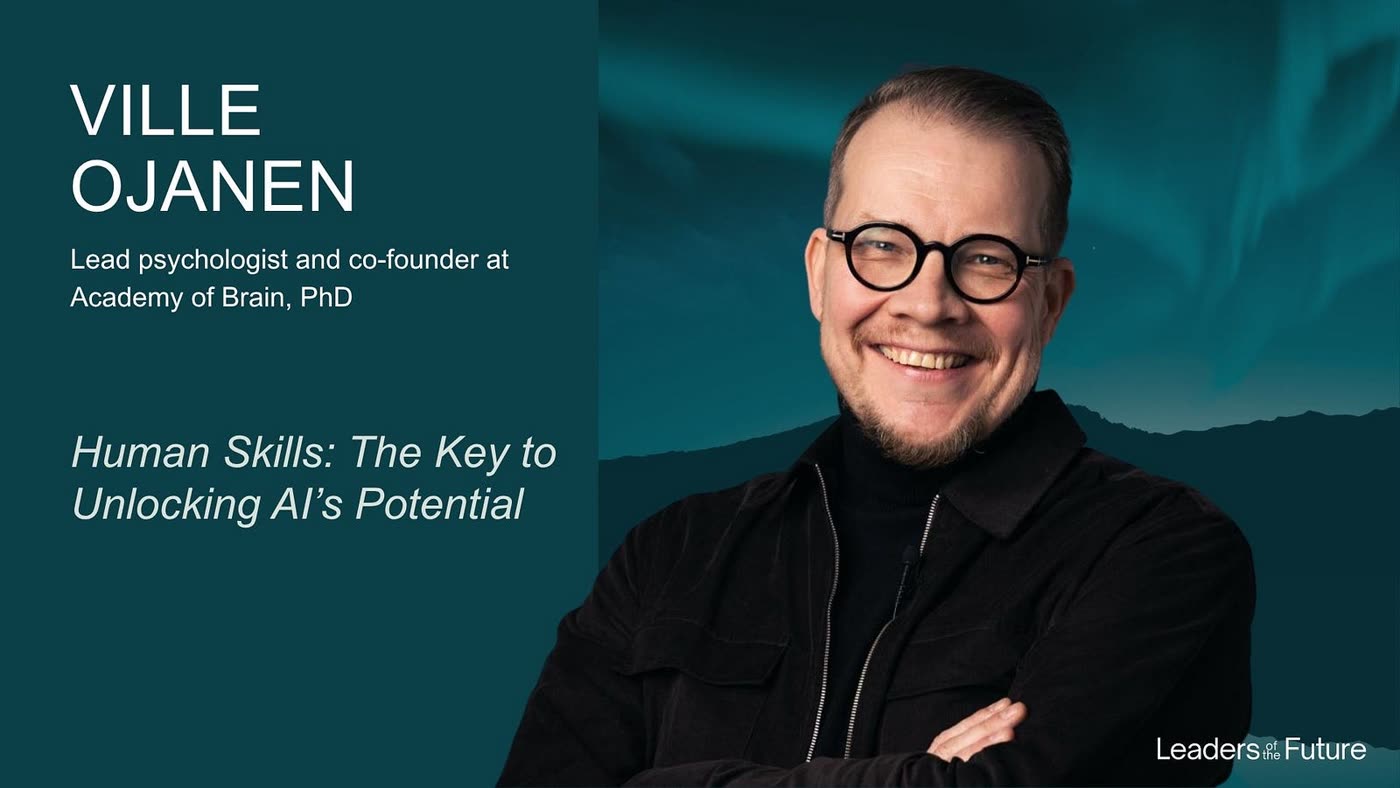
Ville Ojanen: Human Skills: The Key to Unlocking AI’s Potential
Lead Psychologist and Co-Founder at Academy of Brain, PhD
Ojanen presented a science-based framework for building adaptability, which is a critical capacity for navigating any major change, such as AI change. He explained the concept of “adaptive space”, which is a psychological state that human systems (individuals, teams, organizations) have to enter to move from unknown to known. This adaptive space is created through soft skills, and through adaptive space, human systems can absorb change. Ojanen shared three steps on how one can learn soft skills and reflective skills:
- Mentalize your reactions (thoughts, emotions, body sensations).
- Engage in collective reflection (share reactions with a friend, notice differences).
- If needed, identify action points.
This cycle creates trust, safety, and appreciation while building adaptive capacity.
”We are relational mammals. We relate to ourselves and to other people, and you cannot relate to a book in such a way that you relate to another person. We create these collective shared meaning spaces where we face our own inner shadow, the psychodynamics of other people, and ourselves. And through that we create meaning, we create trust, we create safety, we create appreciation.” - Ville Ojanen
Watch Ojanen’s talk from 1:09:05 onwards.
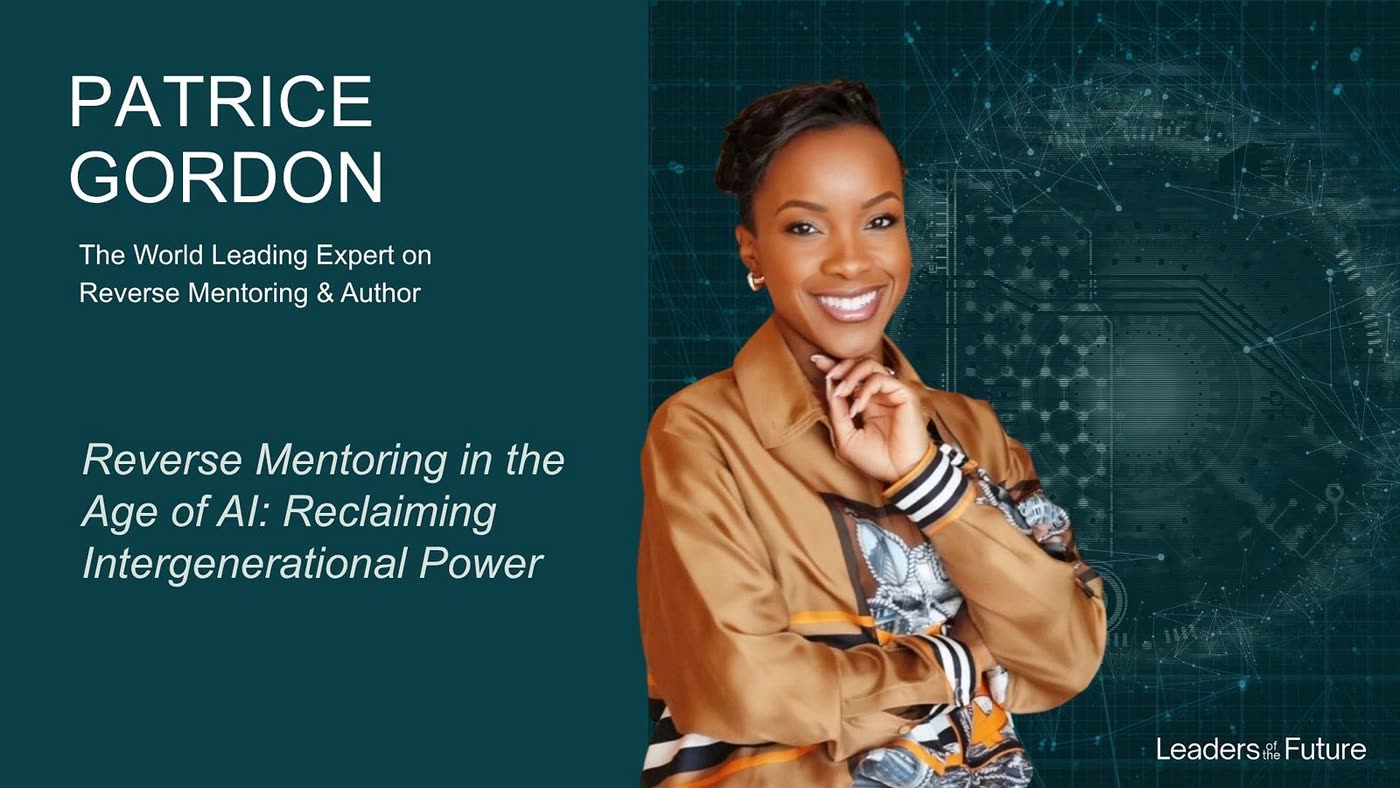
Patrice Gordon: Reverse Mentoring in the Age of AI: Reclaiming Intergenerational Power
The World Leading Expert on Reverse Mentoring & Author
Gordon introduced the concept that we now have six generations in the workplace, five human generations plus AI as the sixth. All of these generations communicate differently and have different contexts for understanding the world. Gordon shared how reverse mentoring builds the “intergen intel” (intergenerational intelligence) needed to navigate this complexity and to drive value. Reverse mentoring matches senior leaders with mentors who provide different perspectives, amplifying underrepresented voices, and breaking down silos.
”Number one challenge that we have in all of our reverse mentoring programs is that people on the ground don’t feel like their leaders communicate effectively or enough with them. And leaders feel like they communicate all the time. So this flow of knowledge is even more important in this shape and vein.” - Patrice Gordon
Watch Gordon’s talk from 1:22:00 onwards.
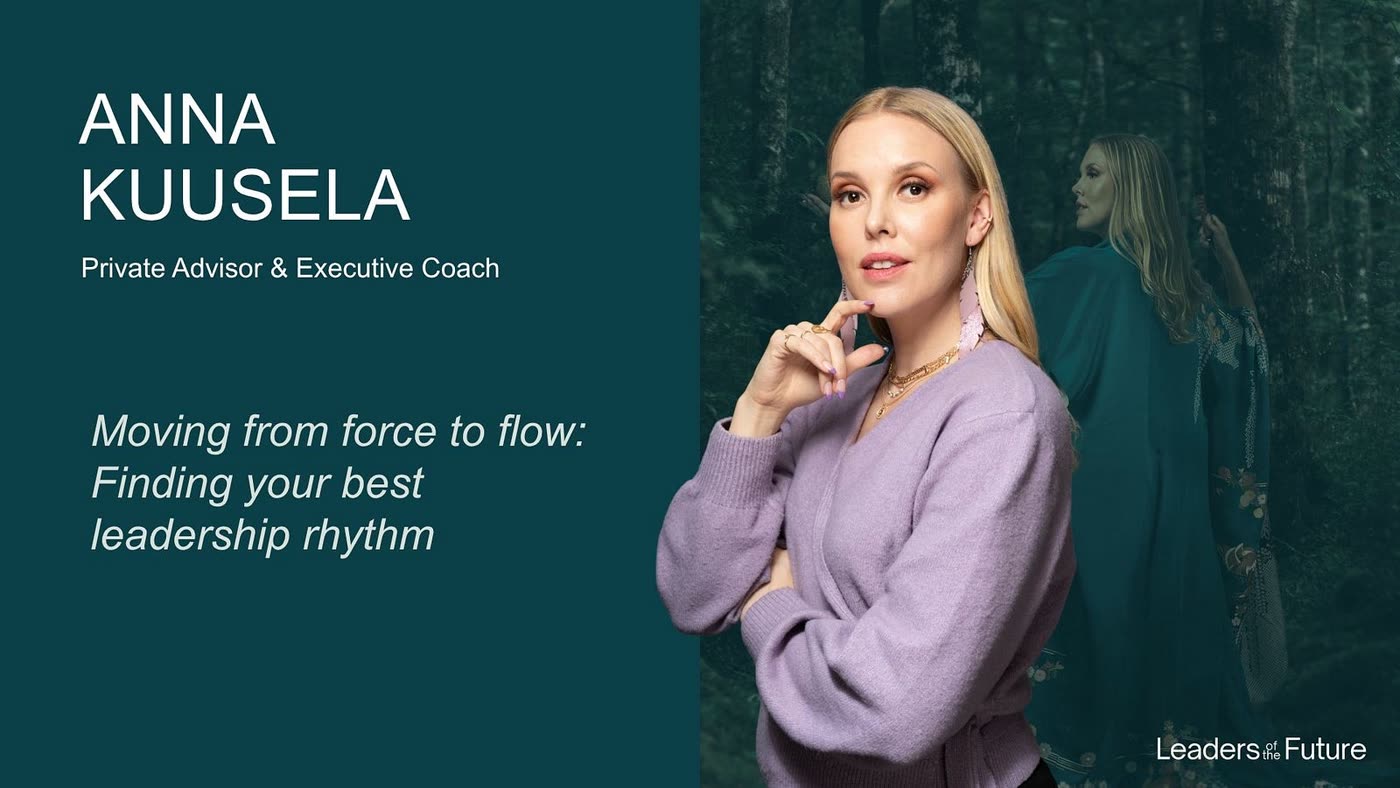
Anna Kuusela: Moving from Force to Flow: Finding Your Best Leadership Rhythm
Private Advisor & Executive Coach
Kuusela offers in her segment an experiential moment rather than a traditional presentation, guiding participants through a real-time shift from force (striving, pushing, stressing) to flow (creativity, intuition, presence). She introduces a three-word framework:
- Witness a situation where you’re using force.
- Wonder by asking: ”What if this moment is here to teach me something?”
- Welcome the new perspective that emerges.
The question Kuusela raises is essential: are we exhausting ourselves with force-based leadership when flow and thriving are available? We’re the first generation with research and tools to facilitate embodied transformation ourselves.
“The world is a reflection of who you are being. When we start to do this kind of work, that is the other side of the coin to then be able to thrive in the world.” - Anna Kuusela
Watch Kuusela’s talk from 1:34:06 onwards.
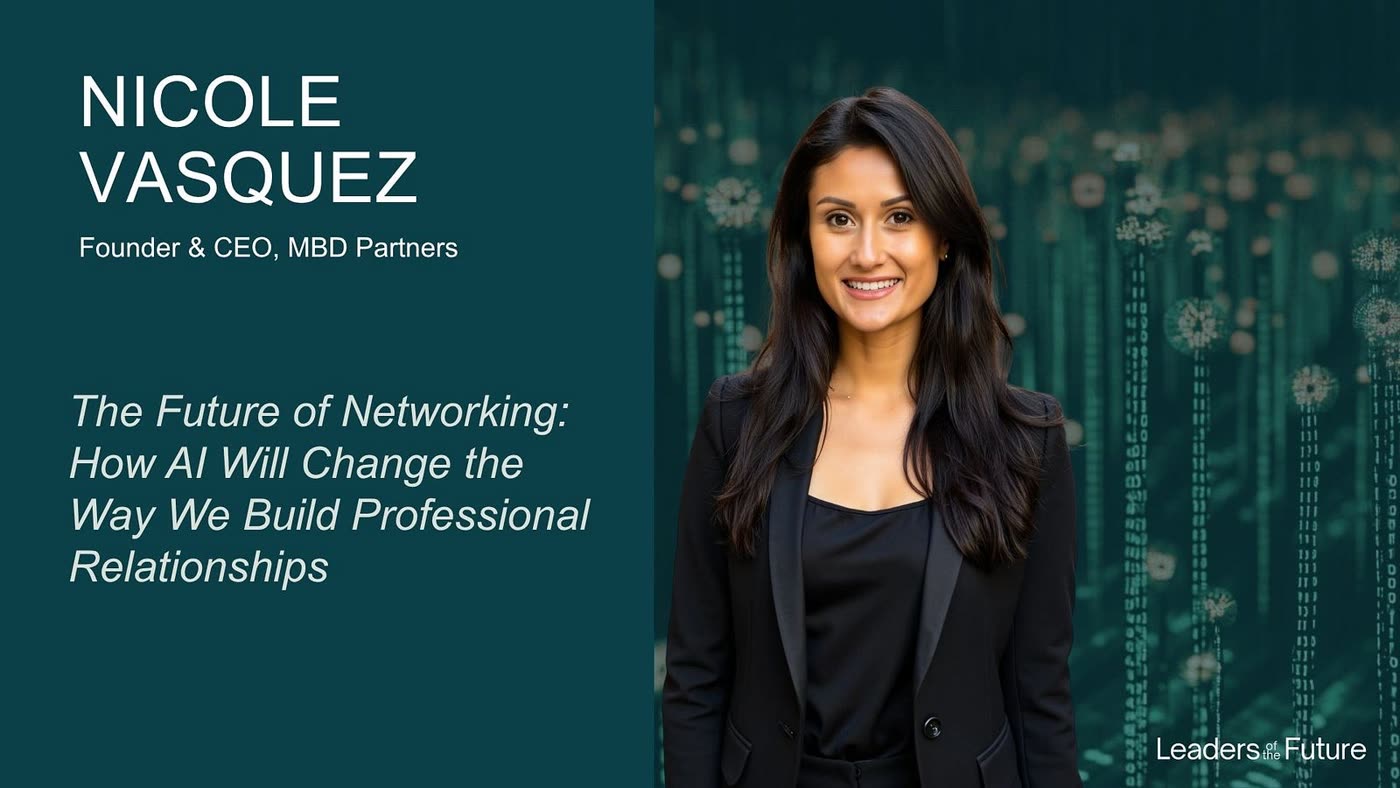
Nicole Vasquez: The Future of Networking: How AI Will Change the Way We Build Professional Relationships
Founder & CEO, MBD Partners
Vasquez closes the seminar with a strategic framework for the future of networking, introducing the concept of a Networking Operating System (OS): five elements that work together to turn your network into your most valuable asset. She explains that AI can match you with people, but being matched isn’t the same as being trusted. Trust, credibility, and reputation cannot be generated instantly.
The question is whether you are treating networking as random activities or whether you are building a system. According to Vasquez, the five elements create a flywheel effect where small actions compound into unexpected opportunities over time.
Networking Operating System (OS):
- CRM for contacts
- Clear networking goals
- Metrics to track ROI
- Strategic positioning
- Intentional community participation
“Stop treating your networking as a series of one-off moves here and there, whatever catches your eye, and start designing a system that works together and compounds over time. That’s your networking OS.” - Nicole Vasquez
Watch Vasquez’s talk from 1:44:13 onwards
The Collective Message
These eight speakers shed light on a truth: the next decade will bring extraordinary change, and leadership is no longer just about roles and titles; it’s about who we are as human beings. From understanding mega trends and the erosion of truth, to building AI literacy and tapping into human potential, to creating adaptive spaces and building trust across generations, the seminar provided both frameworks and questions for leaders to carry forward.
The full recording is available for the Leaders of the Future community, and each speaker has offered to continue these conversations.
Upcoming seminars:
- December 16th: Future of Business & AI
Join the Leaders of the Future community at leadersofthefuture.com
About the Author
Sanni Joensuu
Sanni is a marketing and communications professional with an MBA, working in the startup world. She writes on LinkedIn and Substack, including a series of interviews with six successful business leaders. She is particularly interested in artificial intelligence.
Connect with Sanni LinkedIn
This piece is part of the Leaders of the Future Guest Author Series, bringing together visionary leaders whose insight and wisdom are shaping the next era of leadership in the Intelligent Age. Explore additional pieces from the Leaders of the Future Guest Author Series here.